


I’ll admit it — I recently faced a moment of sheer panic during a post-renovation cleanup. There I was, staring at my brand-new, pristine floor, only to discover stubborn patches of adhesive stubbornly clinging to the surface. It felt like a cruel joke, especially since I had invested so much into eco-friendly solutions and wanted to keep everything safe for my family. That lightbulb moment made me realize: if I didn’t find a gentle but effective way to strip away that residue, I’d be stuck with damage and toxic fumes.
Today, I want to share the practical, proven methods I discovered — methods that have helped me reclaim my floors without resorting to harsh chemicals. Whether you’re dealing with recent construction, remodeling, or just a sticky leftover from old repairs, these techniques are designed to be safe, sustainable, and surprisingly effective. After all, no one should have to compromise their health or the environment just to get a clean, beautiful surface.
Why Adhesive Residue Is More Than a Nuisance
Untreated adhesive can cause long-term damage to your flooring. Over time, it can turn into a stubborn stain, weaken the surface, or even attract more dirt and grime. Plus, many commercial adhesives contain potentially toxic chemicals that you don’t want lingering in your living space — especially if you’re aiming for an eco-friendly home. As studies show, exposure to certain industrial adhesives can have adverse health effects, so tackling this residue isn’t just about aesthetics — it’s about safety.
In my early days of post-construction cleaning, I naively thought simply wiping with a rag would suffice. But I learned the hard way: using the wrong products can scratch the surface or make the residue harder to remove. That mistake taught me to look for methods that are gentle yet effective, keeping my new flooring pristine and toxin-free.
So, if you’re wondering how to eliminate adhesive leftovers efficiently, stay with me. I’ll walk you through three tried-and-true methods that have transformed my cleaning routine. Trust me — these solutions are practical, eco-conscious, and designed to give you peace of mind, knowing your floors are safe and spotless. Ready to get started? Let’s dive into the first method that’s helped me and countless others restore their floors with confidence.
Have you ever struggled with stubborn adhesive residue and wondered if there’s a safer, more effective way to remove it? You’re not alone — many homeowners face this challenge after renovations. The good news is, with the right approach, you can restore your flooring without risking damage or health hazards. Let’s explore these methods together and make your new floors shine again.
Start with Warm Soapy Water
Pour warm water mixed with a few drops of eco-friendly dish soap into a bucket. Use a soft microfiber mop or cloth to gently scrub the adhesive spots, much like wiping away sticky syrup from a plate — gentle, deliberate movements prevent scratching.
My experience
Once, I applied this method on a stubborn patch in my living room after a DIY project. The warm soapy water loosened the adhesive enough for my plastic scraper to lift the chunk without damage. It took patience, but the surface remained flawless and chemical-free.
Use Natural Solvents: Vinegar or Citrus-Based Cleaners
Fill a spray bottle with a 1:1 mixture of white vinegar and water or opt for a commercial citrus-based, eco-friendly adhesive remover. Spray generously on the residue and let sit for 10-15 minutes, allowing the natural acids to break down the adhesive — think of it as a gentle digestion process for tough residues.
My experience
I once tackled floor glue left from a renovation with a homemade vinegar solution. After spraying and waiting, the residue softened, making removal much easier with a soft cloth. The process didn’t harm the finish and released a pleasant aroma, unlike harsh chemicals.
Scrape with Care: Plastic Putty Knife or Spatula
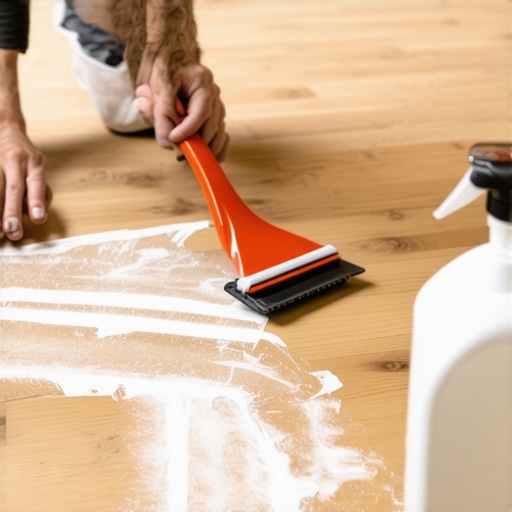
Gently lift the loosened adhesive with a plastic scraper or spatula, avoiding metal tools that could gouge the floor. Imagine coaxing a stubborn sticker without ripping the paper — slow motion, steady hands. Hold the scraper at a shallow angle for a clean lift.
My experience
I used a plastic putty knife on the softened adhesive patch, lifting it in small pieces. The key was patience and gentle pressure, which kept the floor pristine and prevented scratches. Rushing could have dented the surface, so I took my time and stayed gentle.
Follow Up with a Natural Degreaser
In some cases, residual stickiness remains. Apply a natural degreasing agent like a biobased floor cleaner or a dilute castile soap solution, enhancing the cleanup. Think of it as washing away leftover messes with eco-friendly bubbles that leave the surface sparkling without toxic fumes.
My experience
After initial removal, I spritzed my floor with a dilute castile soap solution, then wiped with a clean cloth. The surface was spotless, and I felt good knowing I used safe, sustainable products. Check out more eco-friendly cleaning solutions at this guide.
Final Touch: Rinse and Dry
Wipe the area with a damp cloth dipped in plain water to remove any lingering residues of your solvents or adhesives. Follow with a dry microfiber cloth to prevent water spots. This simple step restores your floor’s fresh appearance, ensuring no residues or dampness remain.
Remember, patience and gentle methods are your best allies when tackling adhesive residues in an eco-conscious way. For more sustainable approaches to post-construction cleaning, explore this resource.
While eco-conscious approaches are gaining popularity, many homeowners and cleaners still hold misconceptions that can hinder effective and safe post-construction sanitation. One common myth is that natural or plant-based products are automatically less potent than chemical cleaners. In reality, many botanically derived disinfectants outperform traditional toxic chemicals in both safety and efficacy, especially when formulated correctly. For example, recent studies highlighted by industry experts show that properly designed plant-based sanitizers can eliminate 99.99% of pathogens without harmful fumes or residues, challenging the outdated notion that stronger chemicals are always necessary for sanitation.
Another misconception involves the belief that higher temperatures are required for effective cleaning. Many think that hot water cleaning is essential, but in eco-friendly practices, surfactant composition, contact time, and pH levels often play more critical roles than temperature alone. Using cooler, sustainable cleaning solutions can be just as effective, provided you understand the core principles of green cleaning. This approach not only reduces energy consumption but also extends the lifespan of your equipment and flooring, thus aligning with ecological goals.
What advanced homeowners often get wrong about eco-friendly cleaning for post-construction sites?
Many underestimate the importance of thorough dust management and molecular-level sanitation. Post-construction spaces are rife with fine silica dust, drywall particles, and chemical residues that can settle deep within air vents and porous surfaces. Simply wiping or mopping isn’t enough; targeted application of probiotic cleaners or enzyme-based solutions can neutralize odors and break down trapped particles at a microscopic level — a nuance highlighted in recent innovations questioning traditional cleaning paradigms. For example, these probiotic methods demonstrate faster, safer cleaning while improving indoor air quality. Ignoring these advanced techniques can leave behind invisible hazards, undermining your health and the environment.
Furthermore, a common mistake is neglecting to update cleaning routines to incorporate sustainable, biodegradable practices. A focus solely on antimicrobial agents without considering their long-term environmental impact can lead to ecological imbalance. Overreliance on certain disinfectants, like some oxygen-based bleaches or aldehyde-based products, can harm beneficial microorganisms and aquatic life when they wash away. To avoid this, it’s vital to choose solutions aligned with the latest eco-friendly standards, ensuring your post-construction cleanup is safe for both your loved ones and the planet.
In summary, the realm of eco-friendly, effective post-construction cleaning is nuanced and rapidly evolving. By challenging assumptions — such as the necessity of toxic chemicals, high temperatures, or superficial cleaning — you embrace smarter, safer practices. Deep knowledge of emerging methods like probiotic and enzyme cleaning can transform your routines. Do you ever find yourself falling into these traps? Let me know in the comments! For more insights, explore this detailed guide on sustainable post-construction sanitation techniques.Maintaining the safety and cleanliness of your newly renovated space requires the right equipment and a strategic approach. When I started focusing on eco-conscious cleaning routines, I realized that selecting the appropriate tools could make all the difference in achieving long-term, sustainable results. One of the most versatile investments I’ve made is a high-efficiency HEPA-filter vacuum cleaner, like the Dyson V15 Detect, which captures 99.99% of microscopic dust particles, including fine drywall and silica dust that settle deep within vents and porous surfaces. These vacuums not only improve indoor air quality but also reduce the need for chemical cleaners, aligning with my goal of an eco-friendly home.
For post-construction dust management, I recommend a combination of microfiber dust mops and electrostatic cloths. Microfiber traps tiny particles more effectively than traditional cotton mops, and when combined with electrostatic cloths for surfaces, they ensure that stubborn dust is not just moved around but genuinely removed. Regularly using these tools prevents dust from settling into vents or spreading into air ducts, which studies, such as those published by the EPA, indicate can cause respiratory issues over time.
Another tool I rely on is a probiotic-based cleaner, often overlooked in traditional cleaning routines. As detailed in industry research by SparkleHomeClean, probiotic cleaners work by introducing beneficial microorganisms that break down organic residues and neutralize toxic substances without toxic fumes. Incorporating these cleaners into my routine has allowed me to sanitize surfaces safely while supporting ecological balance.
To ensure ongoing success, I keep a digital inventory of cleaning protocols using a dedicated app like Tody. It helps schedule routine cleanings, track dust levels, and remind me when to replace or sanitize equipment, ensuring consistency and efficiency. Digital tools like this are predicting the future of cleaning—making sustainable routines more manageable and less time-consuming.
How do I maintain sustainable cleaning practices over time? Regular training on equipment use and refreshers on eco-friendly techniques are vital. I also stay updated with the latest innovations by subscribing to resources such as SparkleHomeClean’s blog or industry journals. These sources often discuss emerging tools that promise to improve green cleaning efficacy, like biodegradable microfiber cloths or low-impact steam cleaners.
Looking ahead, I believe technological advancements such as AI-powered air quality monitors will play a crucial role. These devices can detect fine particulate matter in real-time, allowing for immediate action and targeted cleaning—saving energy and reducing unnecessary chemical use. Embracing these innovations can help homeowners stay ahead in sustainable sanitation.
Incorporate one of these advanced tools—perhaps start with a probiotic cleaner or a high-efficiency vacuum—to significantly boost your eco-friendly cleaning efforts. Remember, the key is consistency, strategic use of technology, and staying informed about new tools that can further your green cleaning goals. For deeper insights into sustainable practices, explore SparkleHomeClean’s resource on post-construction sanitizing at https://sparklehomeclean.com/post-construction-sanitizing-sustainable-solutions-that-shine.
Secrets the Pros Keep Quiet
One of the hardest lessons I learned is that not all natural cleaners are created equal—some might seem eco-friendly but lack the potency needed for post-construction messes. Discovering the power of probiotic cleaners changed my approach, showing me that scientific innovation often outperforms traditional chemicals in safety and effectiveness.
Why I Stopped Relying on Conventional Solutions
I used to default to harsh chemicals, thinking they were faster. However, I realized that eco-friendly methods, when used correctly, not only protect my family and the environment but also deliver superior results. It was a lightbulb moment that made me rethink cleaning routines entirely.
Embracing Technology Transformed My Routine
Investing in high-efficiency vacuum cleaners with HEPA filters and digital scheduling tools elevated my cleaning game. These tools helped me maintain a safer, healthier home environment post-renovation and reinforced my commitment to sustainability. Digital solutions like Tody made consistent eco-friendly practices achievable and less daunting.
Curated Tools That Changed My Perspective
- Probiotic-based cleaners—trusted for safety and deep sanitation; I’ve found they outperform many traditional products in neutralizing toxins without harming beneficial microorganisms.
- Microfiber dust mops—more effective at trapping fine construction dust while reducing chemical use.
- Infrared air quality monitors—these tools help detect invisible pollutants, ensuring my space is truly safe and clean.
Choose Your Path—Act Now for a Greener Future
Switching to eco-friendly, post-construction cleaning methods is more than a trend—it’s a personal commitment to health and the planet. I encourage you to start small, experiment with trusted tools, and keep learning. Every effort counts in creating a safer, cleaner home. Ready to take the next step? Share your experience or ask questions below, and let’s build a healthier environment together.
![5 Botanical Sanitizers That Kill 99% of Germs Without Fumes [2026]](https://sparklehomeclean.com/wp-content/uploads/2026/02/5-Botanical-Sanitizers-That-Kill-99-of-Germs-Without-Fumes-2026-150x150.jpeg)
Leave a Reply