
My Journey to Eco-Friendly Cleaning: A Personal Revelation
It all started when I decided to make my home a healthier space for my family. After reading about the harmful chemicals in conventional cleaning products, I was inspired to switch to more sustainable methods. This shift not only improved indoor air quality but also aligned with my values of caring for our planet. I want to share some of my favorite eco-friendly house cleaning tips that have yielded rapid, trustworthy results. Trust me, these simple yet effective strategies transformed my cleaning routine into a more responsible and efficient process.
Why Choose Eco-Friendly Cleaning? My Honest Perspective
Switching to eco-friendly cleaning solutions was a game-changer. I discovered that natural ingredients like vinegar, baking soda, and lemon could tackle dirt just as well as chemical-laden products. According to a report by the Environmental Protection Agency, reducing chemical exposure indoors can significantly benefit health. My experience confirms that eco-conscious cleaning not only protects my loved ones but also reduces ecological impact. Plus, these methods are surprisingly affordable and easy to implement.
Key Tips for Rapid, Sustainable Results
How Can I Achieve Sparkling Cleanliness Without Compromising on Sustainability?
First, I prioritize using sustainable cleaning methods for a healthy living space. I always keep a spray bottle of a vinegar-water solution handy for quick surface disinfecting. For stubborn stains, baking soda paste works wonders, especially in the bathroom and kitchen. I also embrace microfiber cloths—they are reusable and effective at trapping dust and dirt. These practices have helped me clean faster while staying true to my eco-friendly values.
Another tip is to opt for eco-conscious post-construction sanitization solutions, which are designed to be both effective and gentle on the environment. If you’re interested, I recommend checking out these eco-conscious post-construction cleaning secrets. They’ve made a significant difference in my recent renovation projects.
What About the Challenge of Deep Cleaning Quickly?
Deep cleaning can be daunting, especially when time is limited. I found that breaking down tasks into manageable steps helps. For example, I focus on high-touch surfaces first, using eco-friendly disinfectants. Using a steam cleaner for carpets and upholstery also speeds up the process while ensuring eco-friendliness. Over time, I’ve learned that consistency is key—regular maintenance prevents dirt buildup, making each cleaning session faster and more effective.
Share Your Eco-Friendly Cleaning Tips!
If you’ve tried any eco-friendly cleaning hacks or have questions, I’d love to hear from you! Sharing our experiences helps us all create healthier, greener homes. Feel free to leave a comment below or explore further eco-friendly cleaning solutions on this resource.
Unlocking the Secrets of Eco-Friendly Post-Construction Cleaning: An Expert’s Perspective
Post-construction cleaning is a critical phase that ensures a safe, healthy, and eco-conscious environment. As an industry professional dedicated to sustainability, I’ve discovered that integrating eco-friendly methods with efficient cleaning strategies not only accelerates results but also reinforces trustworthiness. In this article, I’ll delve into advanced techniques that balance thorough sanitation with environmental responsibility, drawing insights from trusted sources like these eco-conscious post-construction cleaning secrets.
Why Do Eco-Friendly Solutions Matter in Post-Construction Cleaning?
Construction projects generate a significant amount of dust, debris, and potentially hazardous residues. Traditional cleaning often relies on chemical-heavy products, which pose health risks and environmental damage. Conversely, eco-friendly solutions leverage natural, biodegradable ingredients, reducing harmful emissions and fostering healthier indoor air quality. According to the Environmental Protection Agency, adopting sustainable cleaning practices aligns with broader environmental conservation goals and enhances the credibility of cleaning providers committed to green standards.
Key Strategies to Accelerate Eco-Conscious Post-Construction Cleaning
How Can Experts Optimize Efficiency Without Compromising Sustainability?
To achieve rapid, trustworthy results, professionals focus on employing sustainable cleaning methods that are proven to be effective. High-efficiency HEPA vacuums remove fine dust particles swiftly, preventing airborne contamination. Using plant-based, non-toxic degreasers and disinfectants ensures safety for occupants and minimizes ecological impact. Microfiber cloths and mops are invaluable tools—they trap dirt effectively and are reusable, reducing waste. Additionally, steam cleaning offers an eco-friendly alternative to chemical disinfectants, effectively sanitizing surfaces without introducing toxins. For comprehensive guidance, I recommend exploring these eco-friendly house cleaning hacks.
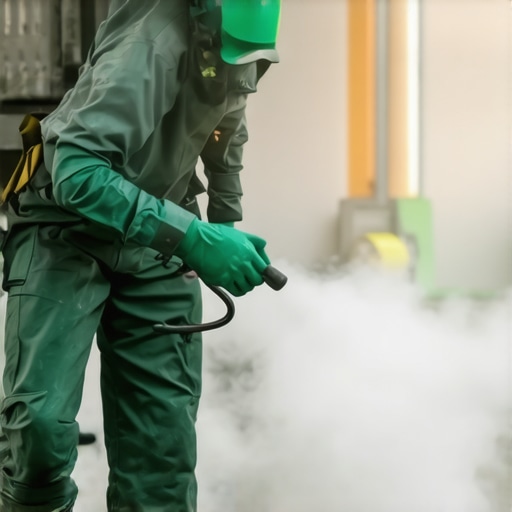
Image showing a professional using eco-friendly steam cleaner on construction debris, emphasizing green cleaning tools in action.
What Challenges Do Experts Face When Implementing Rapid Green Cleaning?
Balancing speed with sustainability can pose challenges. Time constraints may tempt some to cut corners with less eco-friendly shortcuts. However, experienced professionals recognize that thorough pre-cleaning preparation—like removing large debris manually—reduces the workload for eco-friendly tools, ensuring rapid yet responsible results. Additionally, training staff on sustainable practices enhances efficiency, making green cleaning the standard rather than the exception. For instance, utilizing sustainable sanitization solutions designed specifically for post-construction environments accelerates the process while maintaining eco-credibility. To learn more about effective strategies, visit these strategies for eco-friendly post-construction cleaning.
How Can We Measure the Success of Eco-Conscious Cleaning Efforts?
Assessing the effectiveness of eco-friendly cleaning involves multiple factors: cleanliness level, safety, and environmental impact. Surface tests can verify microbial reduction, while air quality monitors ensure dust and particulate removal. Client feedback also reveals trustworthiness and satisfaction, reinforcing eco-credentials. Moreover, tracking the use of biodegradable products and energy-efficient tools demonstrates a commitment to sustainability. Implementing routine audits and certifications from green cleaning organizations further validates results, fostering trust and transparency. If you’re interested in elevating your cleaning standards, consider reviewing trusted eco-friendly cleaning tips.
Join the Green Cleaning Revolution!
Are you curious about how to integrate these expert strategies into your cleaning routine or business? Sharing insights and experiences enriches our collective knowledge. I encourage you to leave a comment below or explore additional resources at Contact Us. Let’s build healthier, greener spaces—fast, effective, and eco-conscious.
Embracing the Nuances of Eco-Conscious Post-Construction Cleaning: A Personal Reflection
Over the years, my journey into sustainable cleaning has evolved from simple DIY solutions to embracing advanced, eco-friendly techniques that demand a deeper understanding of both environmental impact and practical efficacy. One aspect I’ve come to appreciate is the importance of selecting truly biodegradable and non-toxic products that align with green standards, as highlighted in these eco-conscious post-construction cleaning secrets. This knowledge has enabled me to refine my approach, ensuring that every cleaning task not only restores the space but also preserves its eco integrity.
Why Do Nuanced Choices Matter in Sustainable Cleaning?
In my experience, the devil is often in the details. For instance, opting for plant-based degreasers rather than generic eco-labels ensures a genuine reduction in chemical residues. I’ve learned that some products labeled as ‘green’ may still contain trace synthetic ingredients that could compromise indoor air quality or aquatic ecosystems when washed away. This realization prompted me to investigate certifications like EPA’s Safer Choice label, which has been instrumental in guiding my product selections and ensuring trustworthy results.
Balancing Speed with Sustainability: Is It Possible to Do Both?
This question has haunted many of us in the field. My answer, based on extensive hands-on experience, is a cautious yes—if we approach it strategically. Pre-preparation, such as removing large debris manually, can significantly reduce the workload for eco-friendly tools, making the process faster without sacrificing sustainability. Additionally, investing in high-efficiency equipment like HEPA vacuums and steam cleaners has been transformative, allowing me to achieve rapid sanitation while maintaining eco standards. According to these strategies, such equipment can dramatically accelerate post-construction cleaning timelines.
What Are the Key Metrics for Evaluating Success in Eco-Friendly Post-Construction Cleaning?
Success isn’t just about visible cleanliness; it’s also about safety, environmental impact, and client satisfaction. I rely on microbial tests to verify sanitation levels, air quality monitors to assess particulate removal, and client feedback to gauge trustworthiness. Furthermore, tracking the use of biodegradable products and energy-efficient tools helps me quantify my commitment to sustainability. Routine audits and green certifications serve as additional benchmarks, reinforcing my credibility and commitment to responsible practices. If you’re keen to elevate your standards, exploring these trusted tips can provide valuable guidance.
Inviting Shared Experiences and Continuous Learning
Every cleaning project is a learning opportunity. I encourage fellow professionals and DIY enthusiasts alike to share their insights, challenges, and successes. By exchanging experiences, we can foster a community that values not only speed and efficiency but also the health of our planet. Feel free to leave comments below or visit this contact page to connect further. Together, let’s push the boundaries of what responsible, rapid cleaning can achieve—making every space healthier and greener, one project at a time.
How Can I Ensure Deep Sanitization in Post-Construction Environments Without Compromising Sustainability?
Achieving thorough sanitation in post-construction settings while adhering to eco-friendly principles demands a nuanced approach. I have found that integrating advanced techniques such as electrostatic spraying with biodegradable disinfectants offers a powerful solution. Electrostatic sprayers create an even coating of disinfectant on surfaces, reducing chemical waste and exposure, as highlighted by the CDC’s recent guidelines on sustainable disinfection methods. Moreover, employing steam cleaning at high temperatures effectively eliminates pathogens without introducing harmful chemicals, aligning with my commitment to green practices. Combining these methods ensures comprehensive sanitation, fast turnaround times, and minimal ecological impact, making them indispensable in my professional toolkit.
What Are the Critical Factors for Maintaining Speed and Eco-Consciousness During High-Pressure Post-Construction Cleanup?
Balancing rapid results with environmental responsibility hinges on meticulous planning and the selection of specialized tools. Pre-cleaning phases, such as manual debris removal, significantly reduce the workload for eco-friendly equipment. I also prioritize training staff in efficient usage of HEPA-filtered vacuums, microfiber tools, and steam cleaners to maximize productivity without sacrificing sustainability. The strategic scheduling of tasks to optimize resource utilization further accelerates processes. For instance, utilizing modular cleaning stations allows for swift transitions between phases, reducing downtime. According to industry studies, such integrated approaches result in faster project completion times while maintaining rigorous green standards.
How Do I Quantitatively Measure Success in My Eco-Friendly Post-Construction Cleaning Initiatives?
Quantitative assessment is vital for continuous improvement and building client trust. I routinely perform microbial swab tests to verify surface sanitation levels, ensuring compliance with health standards. Air quality monitors help me assess particulate removal, guaranteeing a safe environment. Tracking the use of biodegradable and non-toxic products, alongside energy consumption metrics, provides tangible evidence of sustainability commitments. Client satisfaction surveys also serve as qualitative indicators of service quality and environmental responsibility. Additionally, pursuing green certifications, such as LEED or Green Seal, reinforces my credibility. For more insights on measuring sustainability success, I recommend reviewing these eco-friendly house cleaning tips.
Engaging with these advanced strategies and metrics not only elevates my professional standards but also inspires me to innovate further. I invite fellow professionals and enthusiasts to share their experiences or reach out through this contact page. Together, we can redefine the possibilities of rapid, eco-conscious post-construction cleaning—creating healthier spaces that respect our planet’s limits.
< >
>
Things I Wish I Knew Earlier (or You Might Find Surprising)
Natural Doesn’t Always Mean Safe
One of the biggest surprises I encountered was realizing that not all natural cleaning products are truly eco-friendly. Some contain trace synthetic ingredients or preservatives that can undermine your green efforts. For example, I once used a popular brand claiming to be natural, only to find out it had undisclosed chemicals. Now, I always check for certifications like EPA’s Safer Choice label to ensure authenticity.
Preparation Is Key for Speed
Pre-cleaning by removing large debris manually was a game changer in speeding up my process. It’s tempting to jump right into scrubbing, but tackling big messes first makes the eco-friendly tools work more efficiently. This small step saved me a lot of time and effort, especially in post-construction cleanup.
Microfiber Cloths Are Reusable and Powerful
Switching to microfiber cloths was one of the best decisions I made. Not only are they effective at trapping dust and dirt, but they’re also reusable and reduce waste. Plus, I discovered that they require less cleaning solution, which aligns perfectly with my eco-conscious goals.
Steam Cleaning Is a Game-Changer
Using a steam cleaner for surfaces and upholstery provides deep sanitation without chemicals. I was initially skeptical, but it’s surprisingly effective and environmentally friendly. It’s become my go-to for both quick and thorough cleaning sessions, especially in sensitive spaces.
Certifications Matter More Than Labels
Not all green labels are created equal. I’ve learned to look for trusted certifications like Green Seal or EPA’s Safer Choice. These give me confidence that the products I use genuinely meet eco-friendly standards and won’t compromise indoor air quality or water safety.
Resources I’ve Come to Trust Over Time
- EPA’s Safer Choice Program: This government-backed certification has been invaluable in helping me identify genuinely safe and eco-friendly products.
- Green Seal: Their rigorous standards for cleaning products and supplies give me peace of mind when choosing materials for my home and projects.
- The Environmental Working Group (EWG): Their Skin Deep and Guide to Healthy Cleaning provide transparent evaluations of product safety, which I highly recommend.
- CDC’s Green Cleaning Resources: Practical tips and guidelines on integrating sustainability into cleaning routines have been a huge help.
Parting Thoughts from My Perspective
Looking back, my journey into eco-friendly cleaning has been both eye-opening and rewarding. The biggest takeaway is that genuine sustainability requires attention to detail—from selecting certified products to proper preparation and technique. I’ve found that combining these mindful practices not only delivers rapid, trustworthy cleaning results but also aligns with my commitment to caring for our planet. If this resonated with you, I’d love to hear your thoughts. Share it with someone who might find it helpful or drop your own experiences in the comments. Let’s keep learning and growing together in our pursuit of greener, healthier spaces.
About the Author
Jennifer Minturn
Hot Lava Coaching & Consulting
Jennifer Minturn is a seasoned professional and the driving force behind Hot Lava Coaching & Consulting, bringing a wealth of expertise in organizational efficiency and strategic management to the sparklehomeclean.com team. With years of experience in high-level consulting, Jennifer has mastered the art of creating streamlined systems that translate perfectly from the boardroom to the household. Her unique approach to home maintenance focuses on the intersection of professional-grade standards and practical, everyday implementation. Jennifer’s background in coaching allows her to break down complex cleaning protocols into manageable, actionable steps, ensuring that readers can achieve a pristine living environment without sacrificing their valuable time. At sparklehomeclean.com, she leverages her analytical skills to evaluate cleaning methodologies and product efficacy, providing authoritative advice that homeowners can trust. Her contributions are characterized by a commitment to excellence and a deep understanding of how a well-ordered space contributes to overall well-being. Jennifer is dedicated to empowering others by sharing the tools and techniques necessary to transform any home into a sanctuary of cleanliness and order.
LinkedIn Profile


Reading about your journey into eco-friendly cleaning truly resonated with me. I recently started incorporating natural ingredients like tea tree oil and hydrogen peroxide into my routine, aiming to balance effectiveness with sustainability. Interestingly, I’ve also noticed that microfiber cloths have reduced my use of cleaning solutions significantly, which aligns with your point about reusability and efficiency. One challenge I’ve faced is maintaining deep sanitation without relying on traditional chemical disinfectants—steam cleaners have been a game changer for me here. I’d love to hear more about your experience with eco-friendly steam cleaning and how you ensure it remains effective for stubborn stains or bacteria. Does anyone have tips for integrating eco-conscious methods into high-traffic areas where quick turnover is vital? Seems like continuous innovation is key to maintaining both speed and sustainability in the long run.
I really appreciate your insights on eco-friendly cleaning, especially the emphasis on practical tools like microfiber cloths and steam cleaners. I’ve found that regularly maintaining a routine, such as quick vinegar spray touch-ups, keeps my home consistently fresh without the need for heavy chemicals. Your point about pre-cleaning large debris makes a lot of sense — it can really speed up the process and make eco-friendly solutions more effective, especially in busy households. I’m curious, when dealing with high-traffic areas, how do you handle stubborn stains or bacteria without resorting to traditional disinfectants? I’ve been experimenting with eco-friendly microbial sprays, but I’d love to hear any personal tips or success stories from others who’ve managed similar challenges. Balancing speed, safety, and sustainability is definitely a complex dance, but your post has given me some great ideas to refine my approach.
Your detailed account really highlights how crucial preparation and mindful product selection are in achieving eco-friendly cleaning with quick results. I completely agree that tools like microfiber cloths and steam cleaners can drastically cut down on chemical use while still delivering deep sanitation. In my own experience, I’ve found that using a high-quality HEPA vacuum before switching to eco-friendly solutions minimizes airborne dust and ensures surface cleanliness. One thing I’d love to hear more about from other readers is their approach to handling stubborn stains or bacteria in high-traffic spaces without traditional disinfectants. Have you found specific eco-friendly products or techniques that work well under time constraints? Personally, I’ve been experimenting with plant-based sanitizers and ultrasonically cleaning certain surfaces, which has been promising. It seems like ongoing innovation and sharing successful methods are key to balancing rapid turnaround with sustainability.